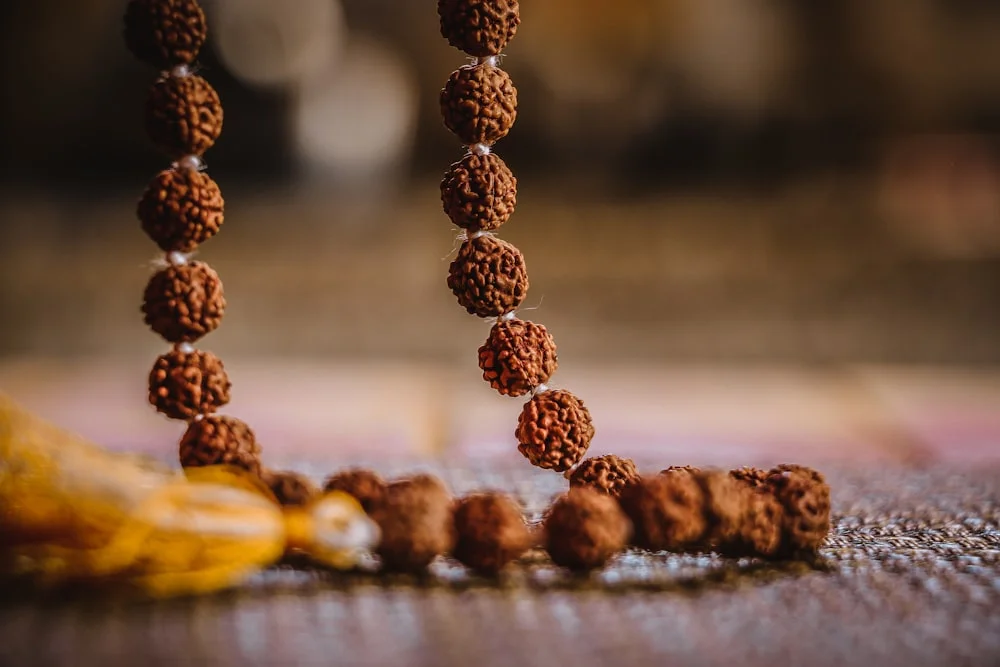
Rudraksha is
not merely a sacred bead; it is a divine symbol of spirituality, heritage,
and the eternal blessings of Lord Shiva.
For thousands of years, Rudraksha has been
revered as one of the most powerful spiritual tools in Sanatan Dharma. It is
believed to have originated from Lord Shiva, one of the three supreme
deities of the Hindu Trinity (Brahma, Vishnu, and Shiva).
According to ancient scriptures, Rudraksha
emerged from the tears of compassion of Lord Shiva, making it a sacred
gift for humanity.
LORD SHIVA – THE DIVINE SOURCE
Lord Shiva’s eternal abode is believed to
be Mount Kailash in the Himalayas, a place that inspires deep spiritual
reverence.
No deity in the Hindu tradition possesses
the same unique and mysterious attributes as Lord Shiva. Temples dedicated to
him are found in almost every village and town across India.
Lord Shiva is worshipped in several forms:
• Shiva Lingam – Symbol of cosmic
energy
• Nataraja – Lord of the cosmic dance
• Mahadev with Parvati and family – Divine harmony of the universe
His divine family includes:
• Goddess Parvati – Divine feminine
power
• Lord Ganesha – Remover of obstacles
• Lord Kartikeya – God of courage and victory
• Nandi – The sacred bull and loyal devotee
For devotees, anything that symbolizes power,
depth, mystery, meditation, transformation, and eternity is associated with
Lord Shiva.
He is believed to be the cosmic force present
in every atom of the universe, controlling the eternal cycle of creation,
preservation, and destruction.
Lord Shiva is also regarded as the
originator of:
• Yoga and meditation
• Music and dance
• Languages and arts
• Ayurveda and herbal sciences
Today, he remains one of the most widely
worshipped deities in India, and references to him can also be found in
ancient temples across China, Japan, and Indonesia.
RUDRAKSHA – THE DIVINE POWER SEED
The word Rudraksha comes from two
Sanskrit words:
Rudra –
Another name of Lord Shiva
Aksha – Tears or eyes
Thus, Rudraksha literally means “The
Tears of Lord Shiva.”
Because of its divine origin, Rudraksha is
considered a powerful symbol of:
• Spiritual awakening
• Fearlessness
• Health and vitality
• Peace and mental stability
• Prosperity and protection
Even today, Rudraksha beads are commonly
found in Hindu, Jain, and Sikh households, either as loose beads or as
sacred prayer malas.
However, despite generations of use, many
people are still unaware of their true value, correct usage, and proper
maintenance.
SCIENTIFIC CLASSIFICATION OF RUDRAKSHA
Rudraksha belongs to the Elaeocarpaceae
family of large evergreen trees, which grow primarily in tropical and
subtropical regions.
More than 360 species of this botanical
family are distributed worldwide.
Scientific Classification
Kingdom: Plantae
Division: Magnoliophyta
Class: Magnoliopsida
Order: Oxalidales
Family: Elaeocarpaceae
Genus: Elaeocarpus
Species: Elaeocarpus Ganitrus Roxb.
GEOGRAPHICAL DISTRIBUTION
Rudraksha trees are found in various parts
of the world including:
• Nepal
• India
• Sri Lanka
• Bhutan
• Myanmar
• Thailand
• Malaysia
• Indonesia
• Tibet
• Southern China
• Japan
• Northern Australia
• Fiji
• Philippines
• New Zealand
• Hawaii
Among all varieties, Nepal Rudraksha
is considered the most authentic and spiritually powerful.
STRUCTURE OF RUDRAKSHA
A Rudraksha bead has a naturally rough
and textured surface with vertical grooves.
At its center lies a natural cavity
where the bead was attached to the fruit stem during growth.
Inside the bead are natural compartments
containing seeds, and each compartment corresponds to the visible lines
on the surface.
These natural lines are known as “Mukhis”
or Faces.
AUTHENTICITY OF RUDRAKSHA
A genuine Rudraksha bead must have:
• The same number of internal
compartments as the number of visible faces (mukhis).
This natural structure ensures the authenticity
and originality of the bead.
CATEGORIES OF RUDRAKSHA ACCORDING TO
FACES
Rudraksha beads are categorized according
to the number of faces they possess.
In Nepal, Rudraksha beads with up to 21
Mukhis have been documented. Rare beads with 22 to 29 Mukhis have
occasionally been discovered.
However, most ancient scriptures including:
• Shiva Purana
• Padma Purana
• Skanda Purana
• Shiva Mahapurana
• Devi Bhagavata Purana
• Rudraksha Jabala Upanishad
primarily mention Rudraksha beads up to
14 Mukhis.
The sacred Nepal Rudraksha belongs to the
species:
Elaeocarpus Ganitrus Roxb.
Other species such as:
• Elaeocarpus Floribundus
• Elaeocarpus Oblongus
• Elaeocarpus Payeolatus
• Elaeocarpus Serratus
• Elaeocarpus Tuberculatus
are mainly used for medicinal purposes.
ORIGIN OF RUDRAKSHA – SCRIPTURAL STORY
According to the Skanda Purana, the
origin of Rudraksha is linked to a powerful divine event.
Once there was a mighty demon king named Tripurasura
who became so powerful that he defeated many gods including Brahma, Vishnu,
and Indra.
Unable to tolerate his tyranny, the gods
approached Lord Shiva for protection.
To destroy the demon, Lord Shiva entered deep
meditation for one thousand divine years.
When he opened his eyes after meditation,
tears of compassion fell from them onto the earth.
Wherever those divine tears touched the
soil, Rudraksha trees began to grow.
From that moment, Rudraksha became sacred
across the three worlds — Heaven, Earth, and the Netherworld.
Scriptures say:
• Touching Rudraksha brings immense
blessings
• Wearing Rudraksha multiplies spiritual benefits
• Chanting mantras with Rudraksha malas grants divine merit
A person who wears Rudraksha on hands,
ears, forehead, or neck lives a life filled with courage, protection,
and spiritual grace.
WHY WEAR RUDRAKSHA
Rudraksha is worn for:
• Prosperity
• Mental peace
• Spiritual growth
• Health benefits
• Astrological remedies (Jyotish)
Different Rudraksha beads are associated
with specific deities, planets, and spiritual energies.